
DevOps Engineer
Pratik brings together AWS cloud expertise and AI-driven approaches to enhance systems and operational resilience.

04 Nov, 2025 | 9 Min read

In recent years, artificial intelligence has changed the way we approach work. It’s taken a lot of the heavy lifting off our plates and shown how much more effective people can be when they’re not bogged down by the routine. Yet, in many organizations, teams still lose time to the same old problem: repetitive, low-value tasks. These are the things that don’t require much skill or creativity but still eat away at productivity.
Automation platforms are stepping in to fix that. By handling the mundane, they let people focus on projects that actually need their expertise. Looking ahead in 2025, one platform in particular is catching the attention of technical teams: n8n. Unlike traditional players such as Make or Zapier, n8n is open-sourced, developer-friendly, and flexible enough to fit into complex workflows. For engineers who want control without being boxed in, it’s becoming a standout choice.
n8n or nodemation is an open-source, fair-code workflow automation platform built with developers in mind. It lets you connect apps and services without drowning in boilerplate, thanks to a clear visual editor. And when the flow needs something more advanced, developers can plug in their own code or custom logic directly into the workflow.
Running n8n locally is pretty straightforward with Docker. For quick tests or small deployments, a single Docker container works fine. For production, Docker Compose or a proper server setup is recommended. Read more here.
docker volume create n8n_datadocker run -it --rm --name n8n -p 5678:5678 \ -v n8n_data:/home/node/.n8n docker.n8n.io/n8nio/n8n localhost:5678 in your browser. On first launch, you can either create an account or skip directly to the editor.Congrats — n8n is up and running! From here, you can start building workflows from the dashboard. For production setups, check out environment variables here and Docker Compose configs here to fine-tune scaling, authentication, and persistence.
What really caught me off guard (in a very nice way) is how naturally and easily JavaScript fits into n8n. Instead of learning a new scripting language or weird syntax for these crazy automations and overhead, I can use plain JS right inside node inputs. For example, when I get a chunky HTTP response, I don’t have to overthink it — I just JSON.stringify or any custom toJSON the part I need and drop it into Google Sheets or something else. Simple, clean, and no extra overhead.
When things get more complex and out of the box, I switch to a Code node. This feels so much like home — I can throw in a console.log and actually see the output in Chrome DevTools very clearly while testing a workflow. It’s a small touch, but incredibly useful when debugging your stuff
Another real kicker, though, is external npm support. On self-hosted setups, I can pull in npm packages directly in my Code nodes. That’s something you just don’t get with tools like Zapier or Make. This alone puts n8n closer to platforms, where code isn’t treated as a second-class citizen.
And yes, Python is supported too. It runs on Pyodide (transpiled into WebAssembly, executed via Node.js), which is wild when you think about it. The only limitation is performance — you can’t sprinkle Python everywhere due to overhead, so most lightweight tasks are still easier in JS. Personally, I’m fine with that since JS is already embroidered into n8n’s DNA. You can read more about code in n8n here.
Automation is powerful, but not every process should run fully on autopilot. With n8n — especially now with AI in the mix, also see.
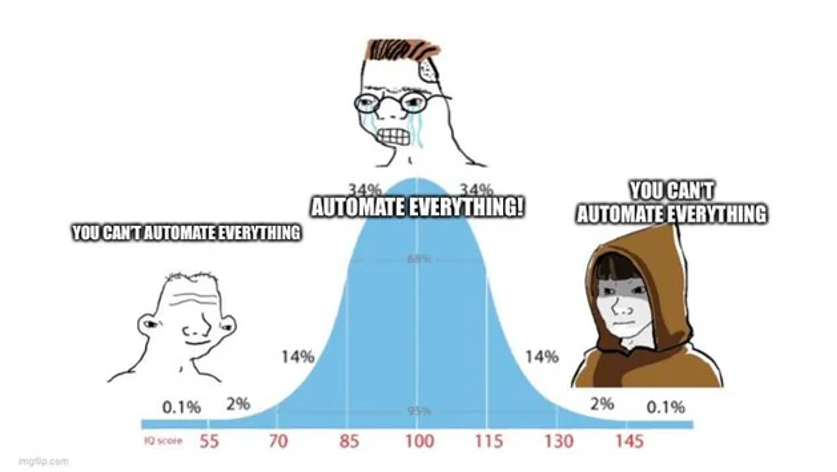
Automation speeds things up, but when workflows hit edge cases, human checks can prevent big delays. n8n makes it easy to combine fast automation with manual approvals where needed.
Fully autonomous systems can cause bigger headaches if they break. With n8n, hybrid workflows reduce firefighting by letting humans step in only when exceptions occur.
Automation keeps routine processes predictable. But for tasks with unique scenarios, adding AI or manual steps in n8n ensures the right kind of consistency — not blind repetition.
Rigid automations often don’t scale. n8n lets you design workflows that adapt to different contexts, making them reusable without being fragile.
The best balance is often hybrid. Automate data collection or policy updates in n8n, but keep risky final steps under human review.
The game-changer? With AI now engraved into n8n so effortlessly and perfectly, you can automate complex, variable logic that was impossible just a few years ago. That means fewer limits — and more freedom to focus on work that matters.
Organizations across industries are turning to n8n for several strong reasons that go beyond simple automation.

Auto-Reply to Customer Inquiries with AI-generated First Responses (n8n), Automate first-response emails so your inbox doesn’t drown you.
Read more about N8N nodes, integrations, and their behavior here to customize them according to your needs even more.
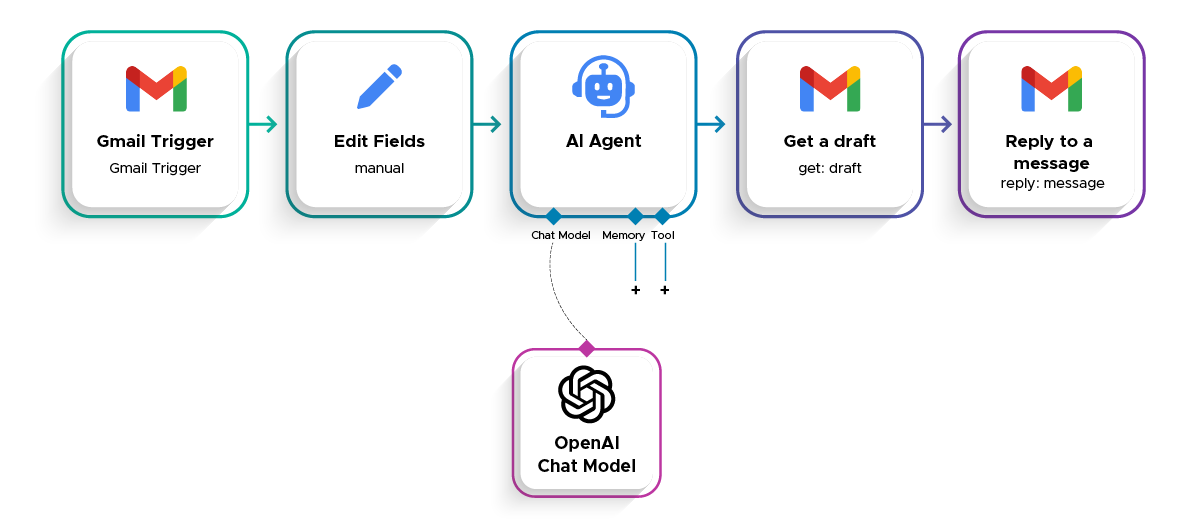
Pro Tip: Add an IF node to gate by keywords (refund, billing, urgent) or VIP domains; log all replies to Google Sheets (timestamp, from, subject, snippet).
Super Pro Tip (advanced, for later): Add RAG (Retrieval Augmented Generation) so replies use your internal docs/FAQs. Retrieve top-k snippets from a vector DB (Pinecone/Weaviate/Supabase) after Extract → include as context in the OpenAI prompt; if no match, ask for missing info.
You can read more about RAG here. If you’d like to go deeper or customize further, you can chat directly with the entire n8n documentation on their docs page (spoiler: it’s powered by enterprise-grade RAG in the backend, which we just scratched a bit).
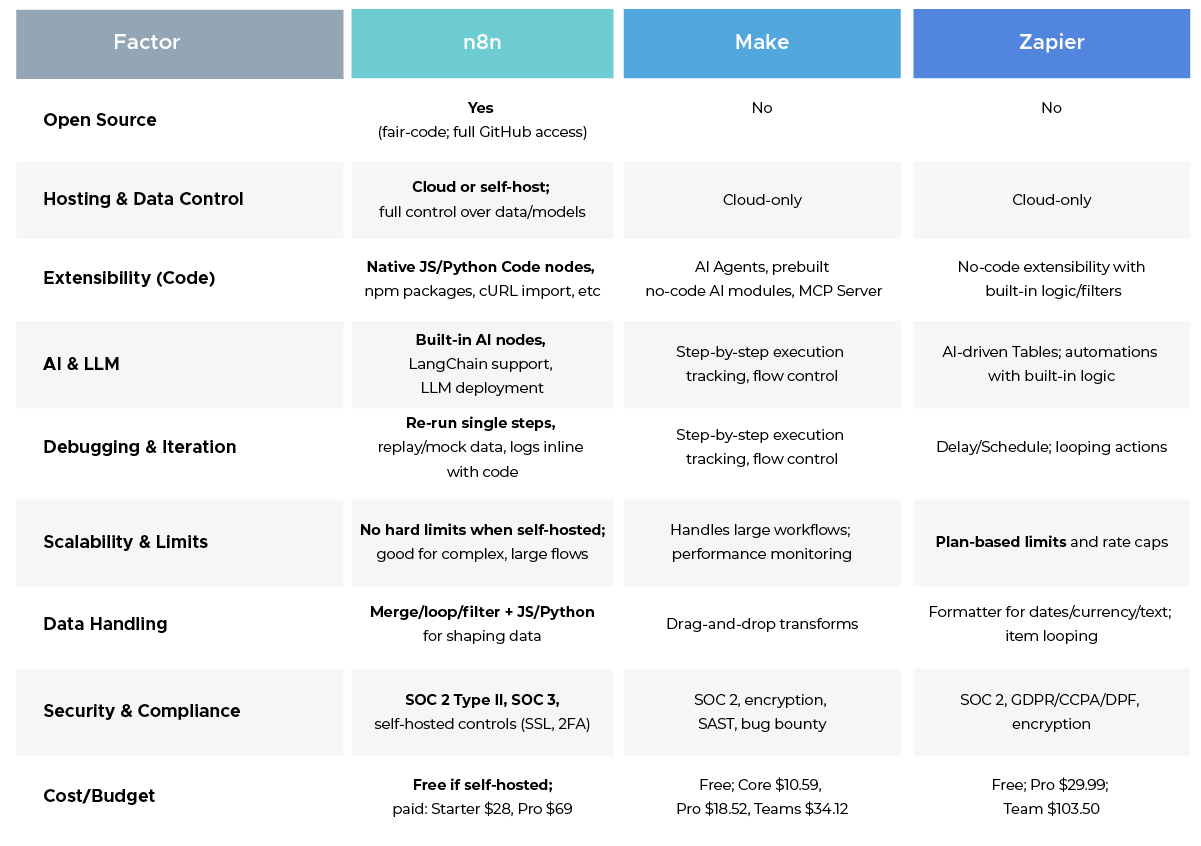
Automation is moving beyond simple workflows into agentic ecosystems — systems where automations talk to each other, adapt, and get stronger the more you connect. With n8n, this evolution happens naturally: a single trigger-action flow can grow into a network of agents that share context, refine themselves, and multiply value. That’s the network effect applied to automation.
As this shift happens, your role changes too. You’re not just a “workflow builder” anymore — you’re the architect of an adaptive system. With n8n’s open design and first-class code support, you decide when humans step in, how agents interact, and where new automations can unlock the most impact.
And here’s the twist: the smarter your workflows get, the more human your work becomes. Instead of grinding through repetitive tasks, you’re steering, applying judgment, and designing feedback loops that keep the whole system resilient.
With n8n, the repetitive stuff takes care of itself — updating spreadsheets, sending emails, summarizing calls, chasing follow-ups, not even this much. You can now execute complex workflows, code, and logic, and more, in a new, cleaner, modular way. That leaves you free to focus on strategy, creativity, and direction.
This isn’t just about saving time; it’s about multiplying output with less effort. And it’s already happening. If you’re not experimenting with n8n, you’re already behind.
Start small. Automate one thing, then. Let your setup scale as your needs grow. Sure, sometimes agents or nodes fail — and you’ll fix them. But that beats spending hours on tasks that should run themselves.
Because brittle systems create busy people. Flexible systems — the kind you build in n8n — create space.
The future of work isn’t about replacing people. It’s about working smarter. The tools are here. n8n is one of them. If you're not automating yet, you're working too hard.
99% of companies saved up to 15% monthly with this plan & achieved peak performance.