

Team CloudKeeper is a collective of certified cloud experts with a passion for empowering businesses to thrive in the cloud.
9
9

Find your cloud savings in under 5 minutes

Get a $100 reward on signup

09 Dec, 2025 | 9 Min read
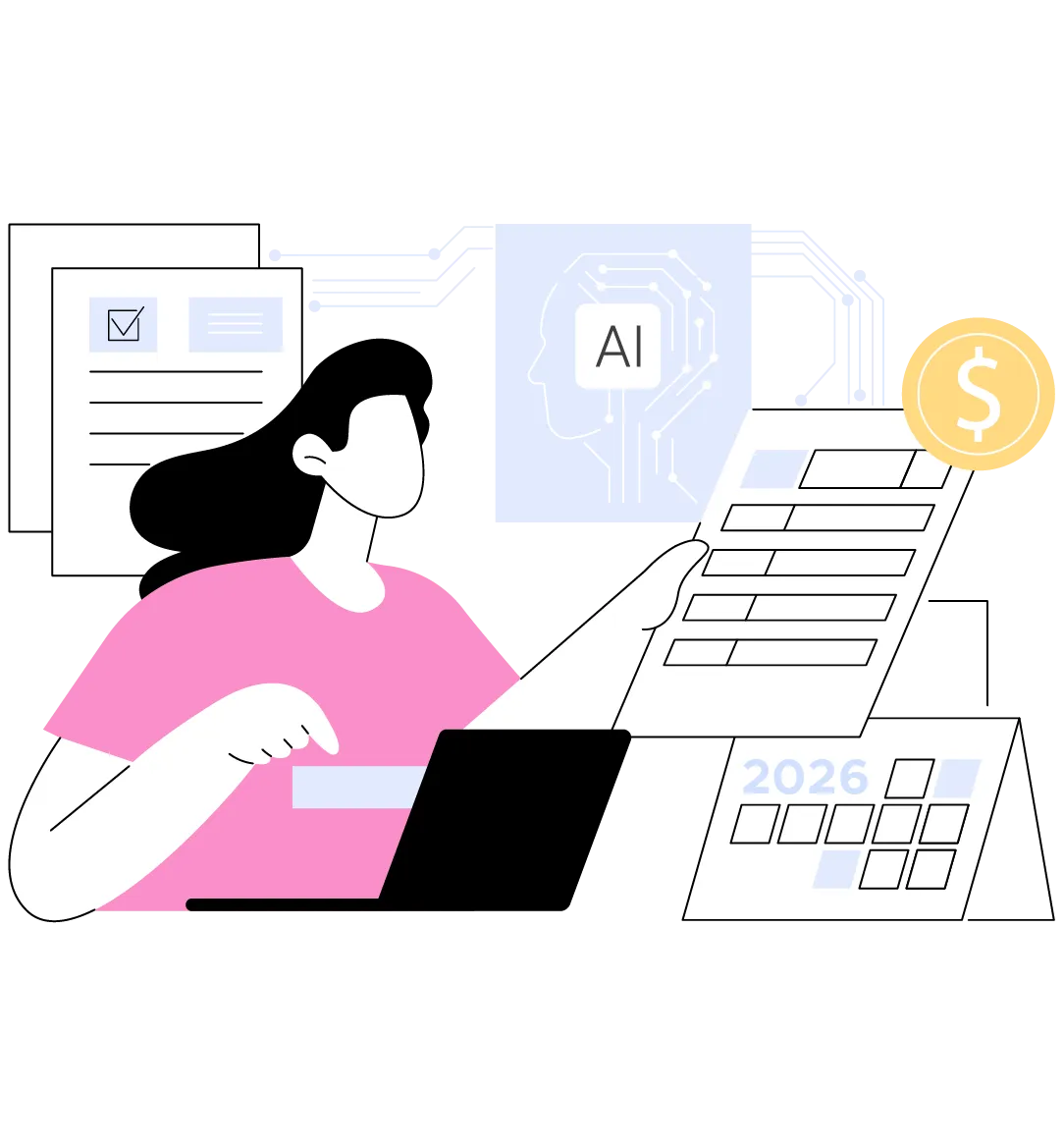
Cloud optimization and cloud cost optimization continues to be a top priority for cloud architects, FinOps leaders, and CTOs. With global cloud spending surging and GenAI pushing compute consumption to new heights, enterprises can no longer rely on manual processes, static dashboards, or traditional cost-control approaches.
The year 2026 marks a fundamental turning point where AI becomes essential for driving cost efficiency, performance, governance, and engineering productivity at scale, making cloud cost optimization more critical than ever.
Gartner forecasts worldwide public cloud end-user spending to reach $723.4 billion in 2025 (up from $595.7 billion in 2024) as organizations accelerate modernization and AI adoption. IDC projects this trajectory crossing $1.35 trillion by 2027, a scale at which optimization is no longer optional.
Artificial intelligence is reshaping cloud optimization because cloud environments now produce far more telemetry than teams can manually analyze. Workloads scale dynamically, distributed microservices shift patterns every hour, and GenAI introduces entirely new compute behaviours. AI helps organizations make sense of this complexity by transforming raw cloud data into actionable intelligence, the foundation of modern cloud cost optimization.
One of the biggest shifts is predictive analytics. Instead of reacting to last month’s overspend, AI forecasts upcoming usage, anticipates cost spikes, and models the impact of architectural decisions. This is especially critical as TD Securities reports that GenAI workloads already account for 12% of cloud spend, rising to 28% by 2028.
AI also brings intelligence to rightsizing and performance engineering. AI models examine months of historical patterns to recommend precise configurations. AWS Architecture shares that AI-driven tuning can reduce performance incidents by up to 45% delivering not just cost savings but better user experiences, reinforcing the value of cloud optimization.
AI-driven cloud cost optimization delivers insights and automation that drastically reduce waste, improve performance, and strengthen governance.
BCG estimates that enterprises waste up to 30% of cloud spend due to idle or over-provisioned resources.
AI identifies optimization opportunities continuously, leading to significant cost efficiencies. Datadog highlights organizations achieving 33% reductions in compute costs using ML-based optimization, proving the impact of AI-powered cloud cost optimization.
Performance reliability also improves. Predictive autoscaling, proactive anomaly detection, and workload modeling enable systems to adapt before degradation occurs. Google Cloud demonstrates 20–40% improvements in compute efficiency through predictive autoscaling.
As multi-cloud becomes the norm, 89% of enterprises now operate across multiple clouds, and 90% are expected to adopt hybrid cloud by 2027, the complexity of managing different pricing models, architectures, and governance frameworks increases sharply. AI adds a unifying layer of intelligence that brings consistency to governance, optimization, and operational control across these fragmented environments.
Enterprises increasingly expect their cloud optimization partner to provide this integrated, intelligent view, helping them scale cloud cost optimization sustainably.
Several forces converge in 2026, making it the strategic year for AI-driven cloud optimisation and cloud cost optimization.
These developments position 2026 as the year in which AI will become inseparable from an enterprise’s overall cloud optimization strategy.
Successful AI adoption begins with a clear assessment of current maturity. Organizations evaluate visibility gaps, tagging consistency, rightsizing readiness, FinOps structure, and automation levels, all foundational elements of scalable cloud cost optimization.
Initial implementation tends to focus on predictive autoscaling, rightsizing intelligence, anomaly detection, and commitment forecasting, areas where AI provides immediate ROI. As models mature, teams extend AI into architectural planning, workload placement, and governance automation.
To support this transition, enterprises increasingly rely on a cloud optimization partner that provides the expertise, modelling capabilities, and architectural guidance needed for sustainable cloud cost optimization. Within this model, an advanced cloud optimization platform acts as the central system of intelligence, harmonizing data across engineering, FinOps, operations, and security.
Over time, organizations refine KPIs, incorporate predictive insights into planning, and move toward continuous optimization as the baseline operating model.
2026 marks a structural shift in cloud optimization. With rising cloud consumption, rapid expansion of AI workloads, more distributed architectures, and maturing automation capabilities, enterprises are moving from manual cost checks toward intelligent, AI-driven cloud optimisation.
The combination of predictive analytics, autonomous governance, and performance intelligence is redefining how cloud environments are managed. Organizations that embrace this transformation early will be better equipped to navigate the next decade of cloud growth supported by the right cloud optimization partner and a capable cloud optimization platform designed for continuous cloud cost optimisation and enterprise-wide cloud optimization.
99% of companies saved up to 15% monthly with this plan & achieved peak performance.