

Find your cloud savings in under 5 minutes

Get a $100 reward on signup
Find your cloud savings in under 5 minutes
Get a $100 reward on signup

Everything you need to run, scale, and optimize Kubernetes - efficiently and cost-effectively.















 Optimization & Efficiency
 Intelligent Monitoring & Visibility
 Alerting & Governance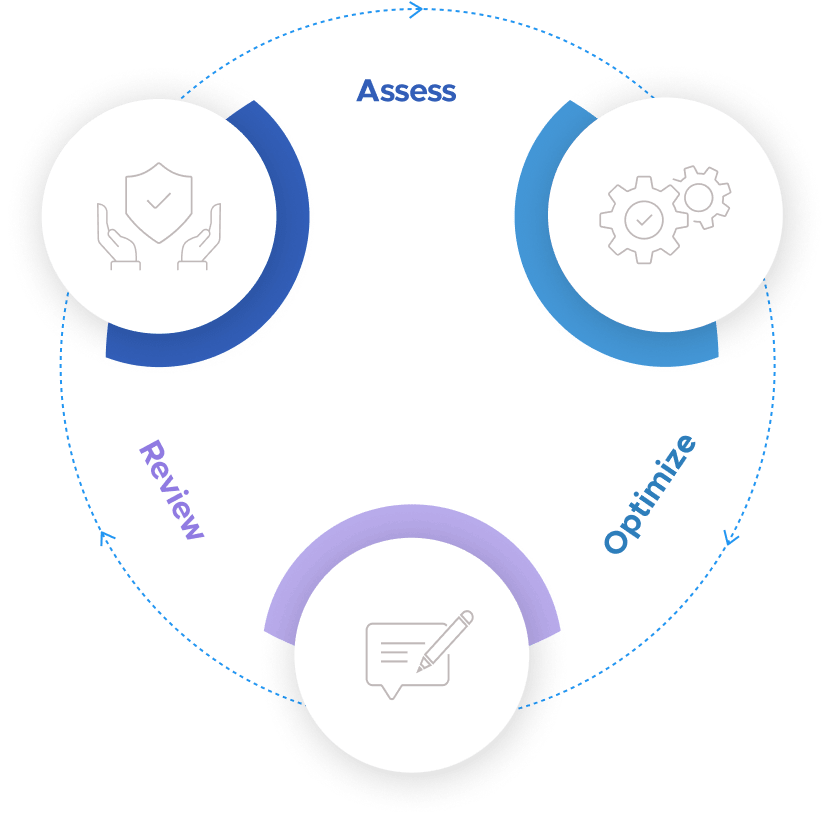




15+
Years of experience in cloud
350+
Certified solutions architects & cloud experts
$120
Million savings delivered
20%
Average savings on the entire cloud bill
Cost savings kicked in immediately and were reflected in the next month’s bill. A second set of savings came in the longer term is due to the team, process and the tools that highlighted the areas we might look in to save money.


Listed in 3 out of 5 segments in IDC Market
Glance: FinOps Cloud Transparency, 2Q23

Recognized by ISG Research for its proven
capabilities and scale in providing FinOps
solutions across 14 categories

Leader in the G2 Grid for Cloud
Cost Management
Frequently Asked Questions
Kubernetes (K8s) is an open-source container orchestration platform designed to automate the deployment, scaling, and management of containerized applications.
High-Level Kubernetes Architecture
Kubernetes is used to automate the deployment, scaling, and management of containerized applications. Instead of managing each container manually, Kubernetes helps teams.
Managing Kubernetes at scale is complex. Companies often struggle with configuration, resource optimization, cost tracking, and ongoing maintenance. Expert-led Kubernetes management helps streamline operations, reduce DevOps burden, and avoid performance or cost issues.
Kubernetes optimization involves right-sizing workloads, fine-tuning autoscaling policies, improving observability, and controlling costs. It ensures your clusters are efficient, high-performing, and cost-effective, without sacrificing reliability.
Yes. CloudKeeper supports all major Kubernetes environments, including AWS EKS, GCP GKE, and self-hosted clusters, offering consistent optimization and cost visibility across all platforms.
We only require read-only access to your Kubernetes environment during the assessment phase. This ensures a secure and non-intrusive review of your cluster setup, workloads, and configurations.
We recommend running a full optimization cycle every 3 to 6 months. This ensures that changes in workload patterns, scale, or cloud pricing are regularly addressed to maintain cost efficiency.
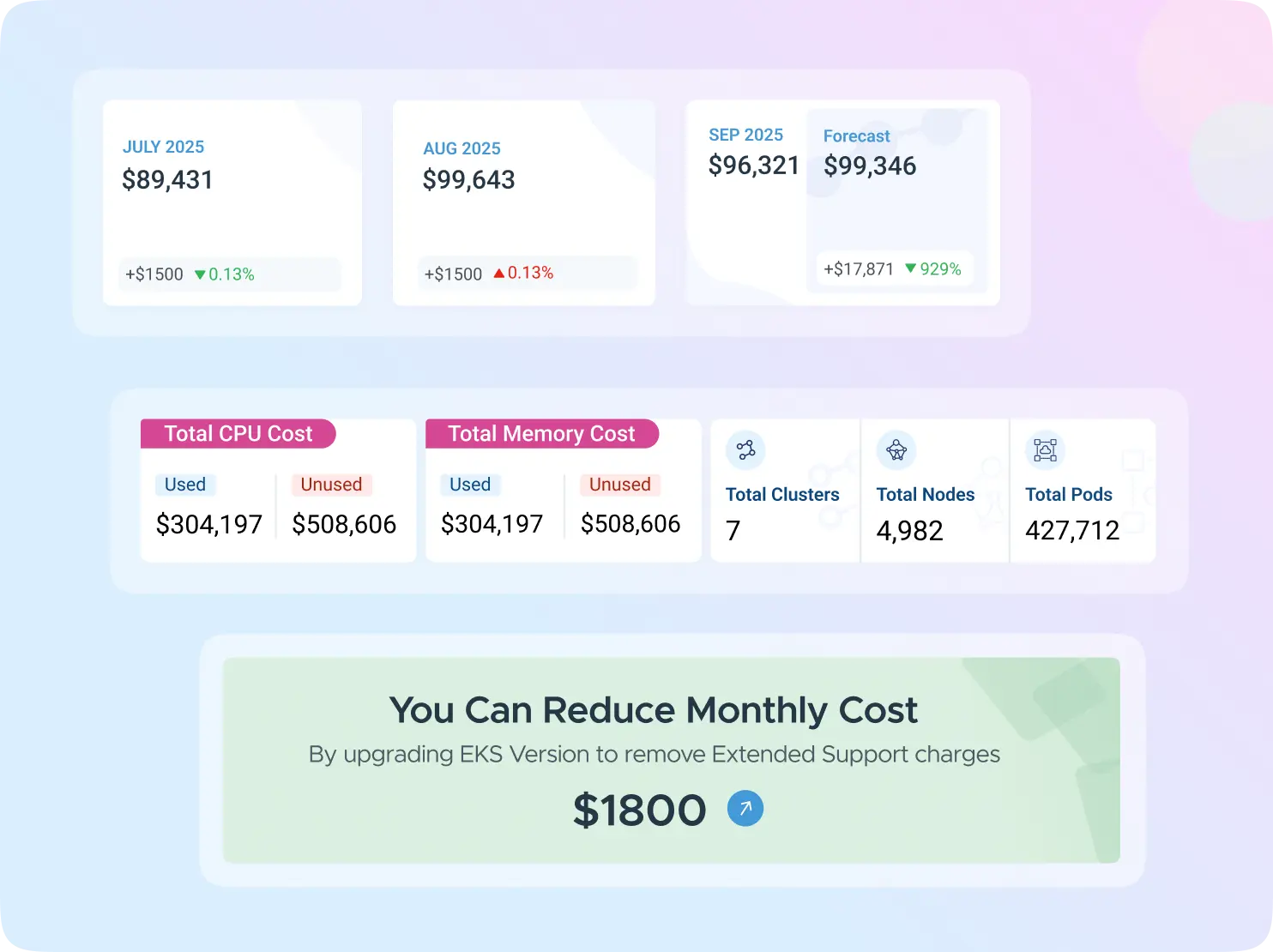
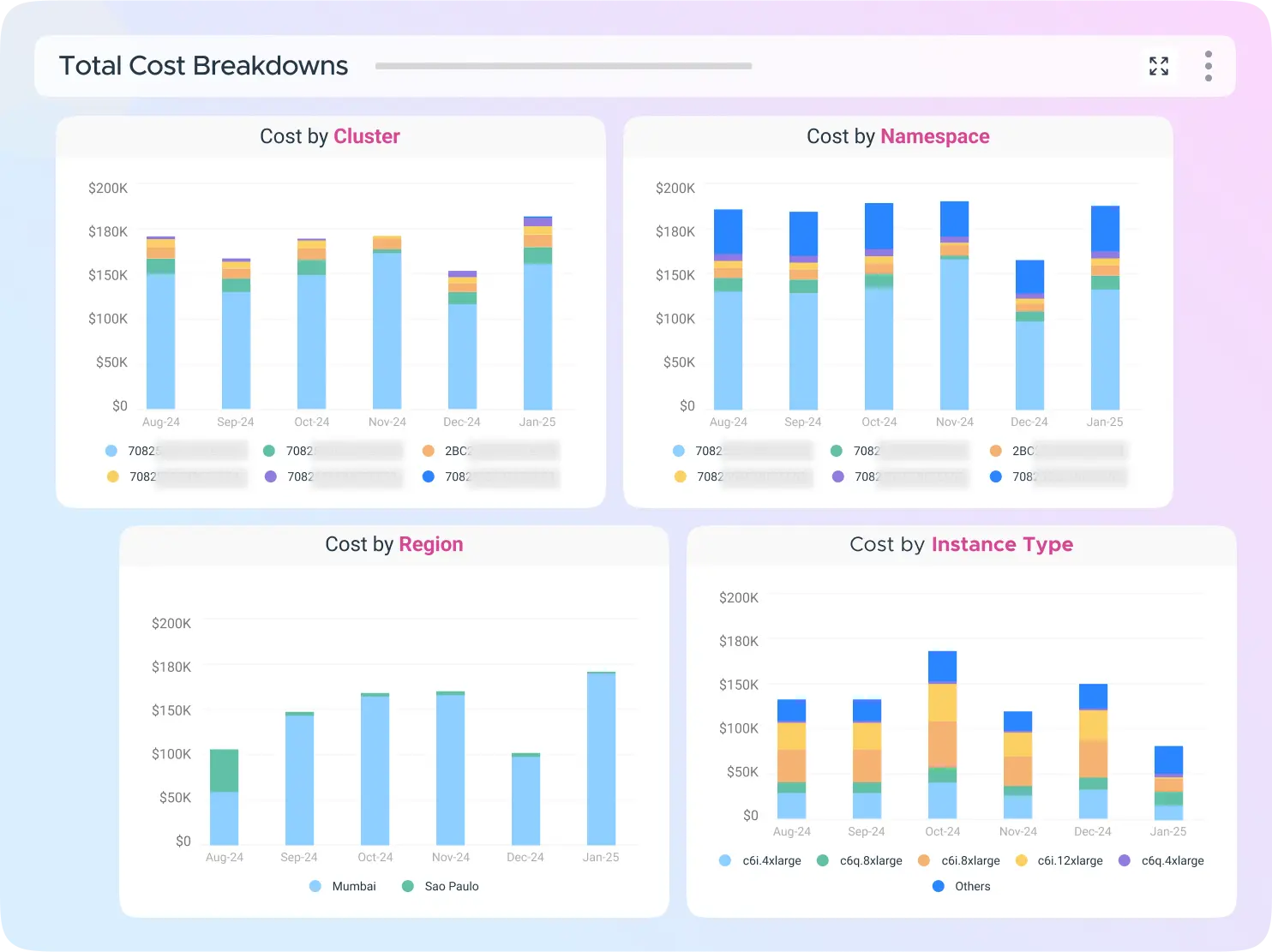
Yes. CloudKeeper creates custom cost dashboards segmented by namespace, label, cluster, or team, so you can track spending across different departments or projects with clarity.
Unlike generic MSPs, CloudKeeper combines deep Kubernetes expertise with a proprietary cost optimization platform, tailored dashboards,and a structured 3-step framework (Assess → Optimize → Review) for ongoing efficiency and performance gains.
Docker is a platform used to create and run containers—lightweight, portable units that package applications and their dependencies.
Kubernetes, on the other hand, is a system that manages and orchestrates those containers across multiple machines.
You can run Kubernetes in AWS in two ways: