


Find your cloud savings in under 5 minutes

Get a $100 reward on signup
Find your cloud savings in under 5 minutes
Get a $100 reward on signup





Data spread across on-prem and multi-cloud blocks a single recovery view
Failures go unnoticed until they result in costly, irreversible data loss
Attackers can target workloads and backups, putting historical recovery points at risk
Audits demand proof of fast, compliant recovery under GDPR, HIPAA, and PCI DSS
Disruptive, expensive testing means most DR plans go unverified until disaster
Backups with the same provider can also go down during an outage
Recovery Approach
From impact assessment to restoring critical workloads, CloudKeeper follows a proven recovery approach to bring your cloud environment back online.
Assess & Prioritize
Protect
Prove
Orchestrate
Optimize

Duplicate physical data centers
High upfront infrastructure costs
Heavy internal IT involvement
Manual recovery processes
Disruptive recovery testing
Single-cloud recovery risk
Limited round-the-clock expertise

Elastic, on-demand cloud infrastructure
Subscription-based OpEx model
Provider-managed DR environment
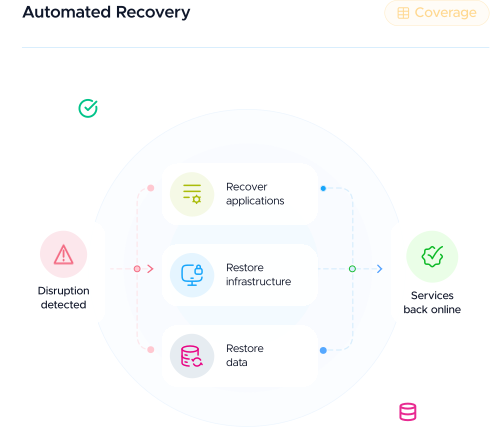
Automated runbooks and failover
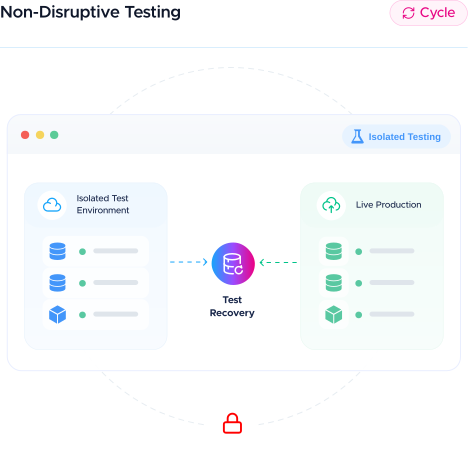
Isolated, non-disruptive testing
Multi-cloud and geographically isolated resilience
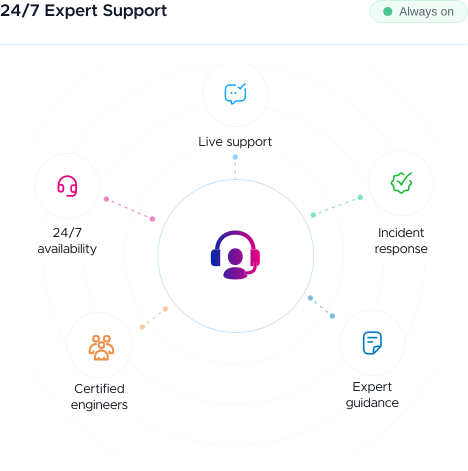
24/7/365 access to certified cloud engineers
Expert-led cloud resilience with automated recovery, continuous governance, and 24/7 support.




Connect your cloud infrastructure through secure APIs with no production downtime.

Assess your environment for configuration risks, backup gaps, data transfer leakage, and recovery concerns.

Classify workloads as critical, important, or unimportant based on their business impact.

Define recovery objectives and align replication or backup schedules with workload priorities.

Build customized recovery runbooks and define key stakeholder responsibilities.

Major Player in MarketScape’s Worldwide FinOps Cloud Cost Optimization Assessment.

Major Player in FinOps Cost Management Products PEAK Matrix Assessment 2025.

Notable Vendor in Magic Quadrant for Public Cloud IT Transformation Services - Midmarket Global.

Product Challenger in APAC for AWS Ecosystem Partners 2025.
Frequently Asked Questions
Backup as a Service focuses on retaining data copies, while Disaster Recovery as a Service replicates the broader infrastructure needed to restore workloads after an outage.
Recovery Time Objective (RTO) defines how quickly you need to restore operations after a disruption.
Recovery Point Objective (RPO) defines how much data loss a business can tolerate and, therefore, how often it needs to replicate or back up data.
You can perform recovery testing by cloning production replicas into isolated cloud environments. Teams can then test failover, application startup sequences, network connectivity, and backup integrity without affecting production.
A cold DR tier keeps backups passively in cold cloud storage, and provisions compute when needed. A warm DR tier continuously replicates data and keeps virtual compute resources on standby for faster recovery.
A disaster recovery plan is only reliable if you test it. Regular testing validates recovery procedures, identifies gaps, and ensures workloads can be restored as expected.