



9
9The State of FinOps 2026 is here! This annual survey by FinOps Foundation includes responses from over 1,000 practitioners managing $83bn+ in annual cloud spend. In 2026, the discipline of FinOps has moved far beyond its original roots in cloud cost control into comprehensive technology value management.
Why the ‘State of FinOps 2026’ Is Important for Modern FinOps Teams?
The technology landscape has never been more complex: AI pilots everywhere, SaaS sprawl, data centers that refuse to die, and pressure to prove ROI on every investment.
The State of FinOps 2026 report captures how real teams are responding to that complexity:
- Where do they focus their time?
- What skills are they trying to build?
- How are they organizing internally?
- Which tools and practices are actually working?
In this blog, we break down the most important insights from the report - what FinOps looks like in 2026, where it’s headed, and why it matters to organisations of all sizes.
Whether you’re a FinOps practitioner, technology leader, or business executive, these findings can help you understand how organisations are approaching technology spend in 2026 and how FinOps is becoming a strategic driver of value.
A Defining Moment: From Cloud to Technology Value
Sometimes, the biggest shift in an industry is captured in a single sentence.
In 2026, the FinOps Foundation updated its mission from “advancing the people who manage the value of cloud” to “advancing the people who manage the value of technology.”
That small change says a lot. FinOps has moved beyond managing cloud bills to helping organizations understand the broader value of their technology investments.
What started as a practice focused on controlling cloud costs has evolved into one that guides smarter technology decisions and drives business value.
This mission evolution isn’t cosmetic - it reflects the reality practitioners see every day.
TL;DR: State of FinOps 2026
- FinOps has evolved from cloud cost control to technology value management.
- Scope is expanding - teams now manage AI, SaaS, licensing, private cloud, and data centers.
- AI in FinOps is the top priority - 98% of teams manage AI spend, and demand for AI cost skills is rising.
- Optimization alone isn’t enough - focus is shifting to governance, forecasting, and value measurement.
- FinOps is becoming strategic - 78% of teams now report to CTO/CIO and influence major tech decisions.
- Shift-left FinOps embeds cost insights earlier in architecture and development.
- Cross-team collaboration and better tooling are key as FinOps scales across the technology stack.
Key Finding #1 - FinOps Is No Longer Cloud-Only
One of the most striking insights from the report is how broadly organisations are applying FinOps practices. What used to be a discipline almost exclusively tied to public cloud spend now embraces multiple domains.
- 90% of teams manage SaaS spending (up 25% Y-o-Y)
- 64% handle software licensing
- 57% cover private cloud
- 48% manage data centers
- 98% address AI costs (up from 63% in 2025)
28% track labor costs
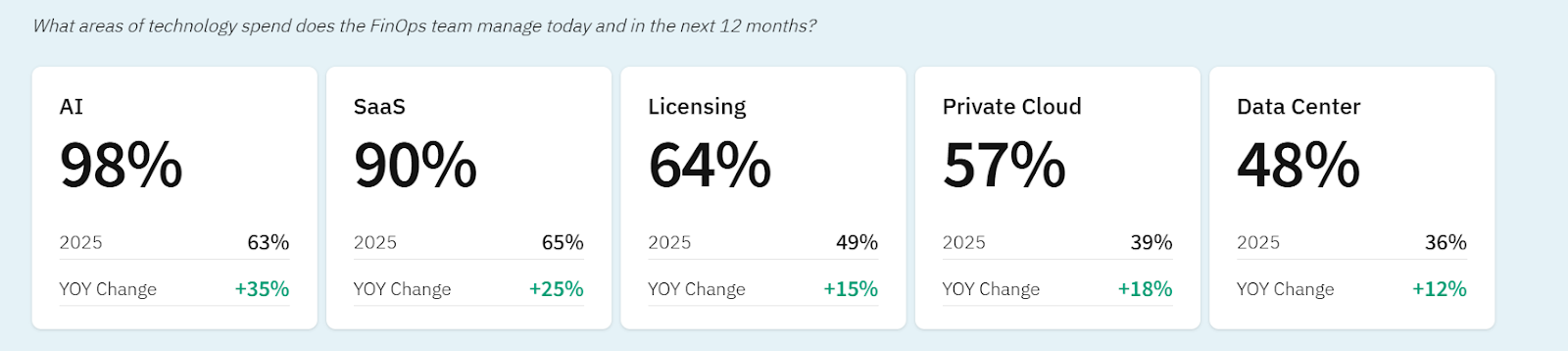
(Source: State of FinOps 2026 Report)
This expansion reflects a key shift: organisations want financial clarity across all technology investments, not just cloud bills, with AI management at 98% leading all categories.
Why does this matter?
Because tech spend today isn’t just about servers and services. It’s about tools that drive innovation, automation, customer experience, and competitive differentiation. When organisations can view all of that through the same financial lens, they gain insights that finance teams alone could never uncover.
Key finding #2- AI Takes Center Stage
Let’s talk about the elephant in the room: AI.
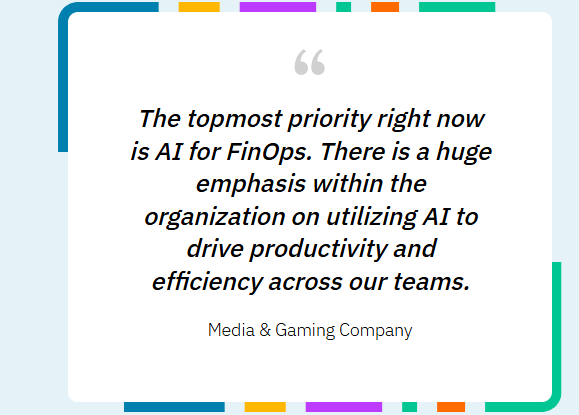
One of the top forward-looking priorities in 2026 is FinOps for AI.
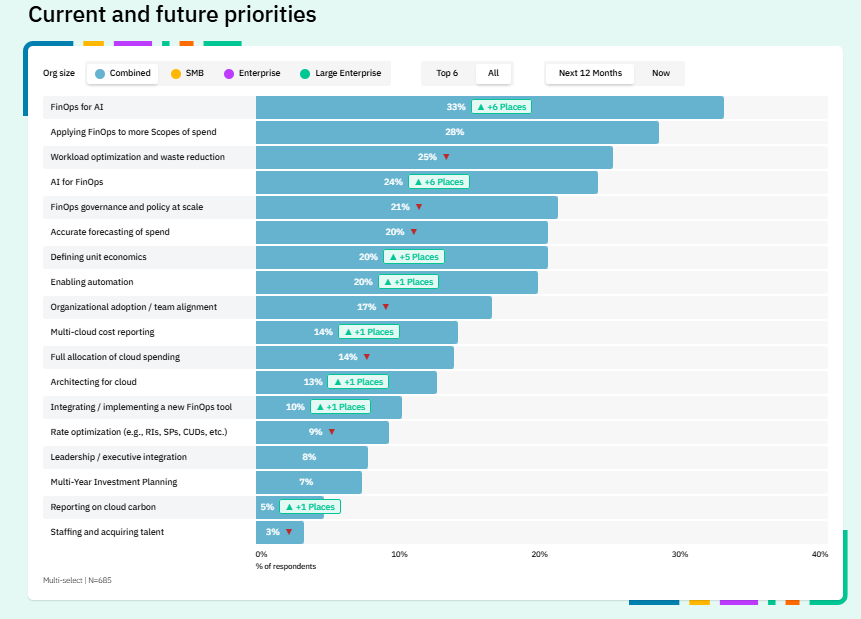
Now, managing AI spend isn’t just part of the conversation - it’s the biggest priority teams have this year. According to the latest findings, an astounding 98% of organisations surveyed are managing AI spend in their FinOps practice, up from just 31% two years ago.
That’s not incremental growth - it's a massive breakthrough.
And here’s what makes it really interesting:
- FinOps teams aren’t just tracking AI costs - they are being asked to support AI investments directly by finding efficiency gains elsewhere. In other words, they are helping organisations find the money to innovate.
- AI cost management has become the #1 skillset FinOps teams are hiring for, highlighting how central it has become to the discipline itself.
But it’s not just about curbing expensive AI bills. It’s about ensuring AI spending delivers measurable value - whether that’s automating workflows, driving product innovation, or unlocking new revenue streams.
So, while old perceptions of FinOps focused on saving money, the new reality is about balancing cost and strategic impact.
AI in FinOps: New Challenges and Opportunities
The State of FinOps 2026 report identifies three interconnected challenges and opportunities when extending FinOps practices to AI workloads.
Core Challenges
AI spend creates unique visibility gaps compared to traditional cloud services:
- Complex pricing: Variable models (tokens, GPU-hours, inference vs. training) vary across providers
- Allocation difficulties: Shared models, exploratory pilots, and mixed GPU workloads complicate business unit attribution
- ROI uncertainty: Experimental nature makes value measurement difficult during early phases
AI is also beginning to improve FinOps operations themselves. Early use cases include:
- Anomaly detection and faster cost alerts
- Automated rightsizing recommendations
- Natural-language queries for cost data
- Automated discount optimization
- AI-assisted tagging and cost allocation
AI is emerging as a productivity lever - helping teams analyze complex spending patterns faster and make more informed financial decisions.
Key Finding #3 - Optimization is Table Stakes; Value Is the Goal
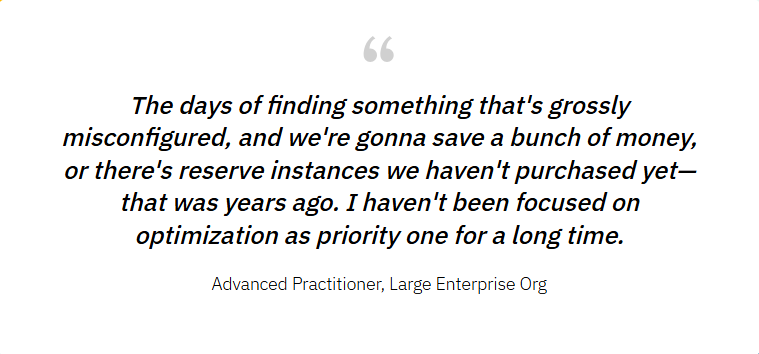
For years, many organisations focused on cutting obvious waste: turning off unused servers, rightsizing large instances, and cleaning up bad tags.
The 2026 report shows that those easy wins are largely behind us.
Practitioners report diminishing returns in cloud optimization: “We have hit the ‘big rocks’ of waste and now face a high volume of smaller opportunities that require more effort to capture.”
Another described reaching 97% optimization in their Cost Optimization Hub, with the remaining 3% intentionally not actioned for business reasons.
A Shift in Priorities
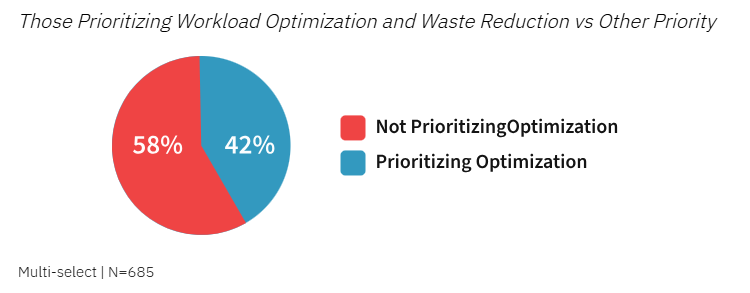
This shift suggests a maturing discipline where savings alone are no longer the end goal. Optimisation and waste reduction are still the top current activities, but teams are now placing equal or greater emphasis on:
- Governance and policy
- Organisational alignment
- Forecasting and budgeting
- Unit economics and value measurement
- Influencing technology selection
Mature FinOps practices are less about cutting costs alone and more about increasing the value technology investments deliver.
Key Finding #4 - Power Shift: Closer to the CTO
One of the most significant trends captured in the report is where FinOps sits in organisations.
In 2026:
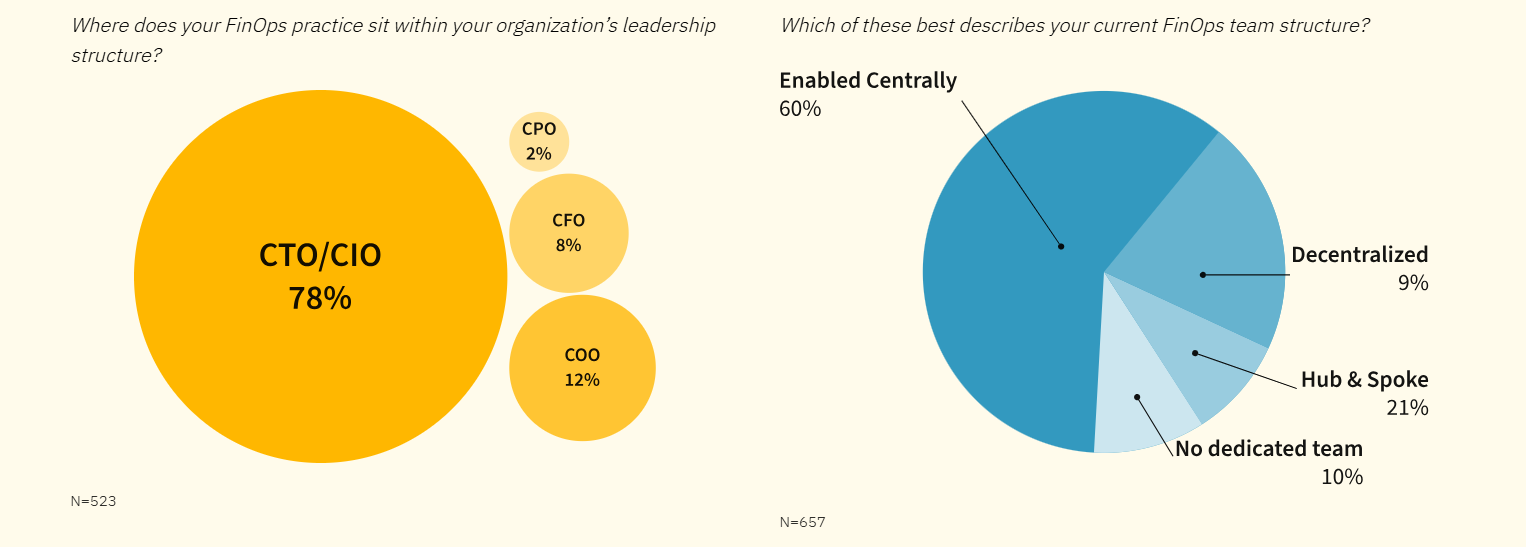
- 78% of FinOps teams now report to the CTO or CIO, rather than finance.
- Teams that engage at the VP/C-suite level have 2–4× more influence over strategic decisions like cloud provider selection, hybrid vs. cloud placement, and long-term investment decisions.
This matters because influence means a shift from reporting cost to shaping strategy. FinOps professionals today help guide major decisions - from negotiating multi-year commitments to determining whether a workload should be built in AI, on-prem, or in a hybrid cloud.
FinOps has moved from the back office to the boardroom.
FinOps is no longer a back-office analytics function - it’s part of strategic technology decision-making. Teams are influencing long-term contracts, provider choices, and investment roadmaps.
Key Finding #5 — Shift Left Is Here, But Measurement Is Hard
Another big theme emerging in 2026 is “Shift Left.” Unlike older FinOps practices that focused on analysing bill after bill, teams are increasingly embedding financial context before code is written or infrastructure is provisioned.
That means:
- Engineers and architects get cost visibility during design phases
- Teams estimate the spend impact before deployment
- Forecasting and budgeting are integrated with planning workflows
The idea is simple: avoid cost rather than react to it. But here’s the tricky part - while everyone talks about this shift, measuring its impact remains challenging. If a cost never materialises because you prevented it, how do you quantify those savings? FinOps teams are still figuring that out.
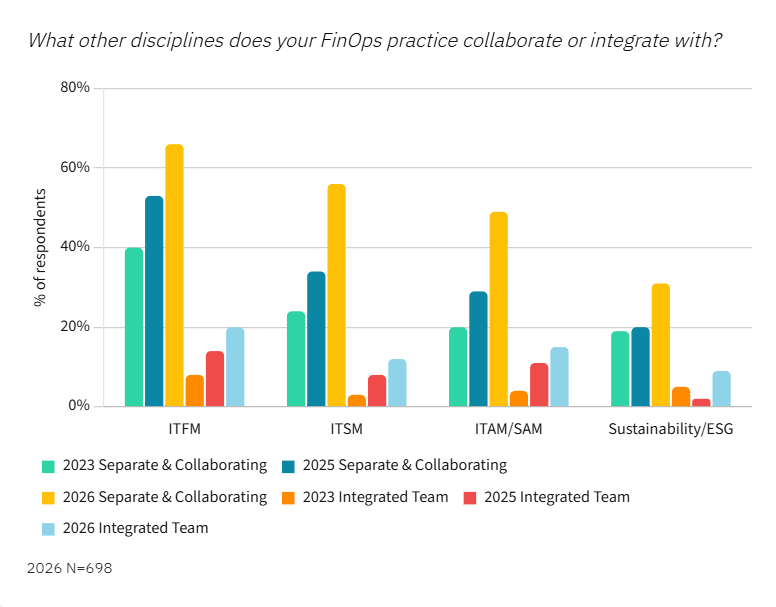
Key Finding #6 - Intersecting Disciplines Are Converging
FinOps isn’t a siloed team anymore. It’s a cross-functional operating model where numerous disciplines intersect:
- IT Financial Management (ITFM) — shared governance data
- IT Asset Management (ITAM/SAM) — compliance and efficiency
- IT Service Management (ITSM) — shared processes and policies
- Platform Engineering — early cost guidance embedded in development
- ESG and sustainability teams — aligning cost and carbon/energy metrics
This convergence shows that effective technology value management isn’t achieved in silos - it’s a team sport.
Key Finding #7 - Lean Teams, High Demand for Skills
Despite this broad scope, most FinOps teams remain lean. Instead of adding headcount to scale, organisations rely on automation, tooling, federated champions embedded in product and engineering teams, and stronger governance frameworks.
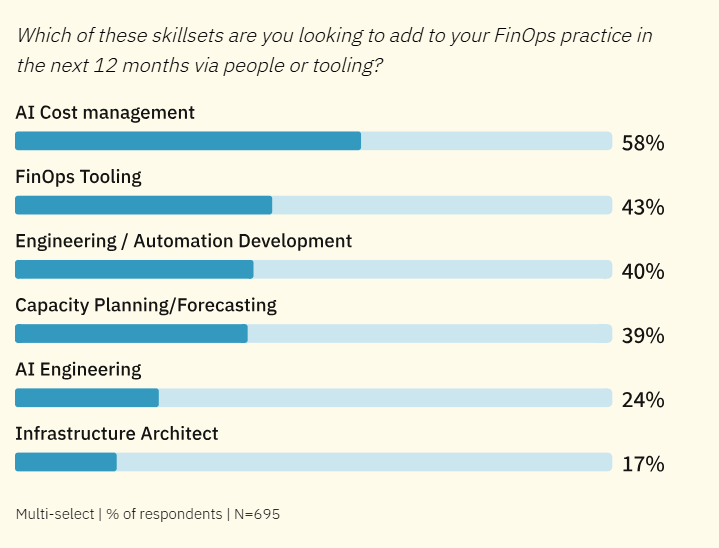
But what skills are in demand today?
- AI cost and value management - #1 skillset teams plan to add
- Tooling expertise and automation development
- Data analytics and forecasting ability
This reflects that FinOps is increasingly data-driven, engineering-aligned, and forward-looking - not just a cost accounting discipline.
Key Finding #8 - Evolving Tooling Expectations
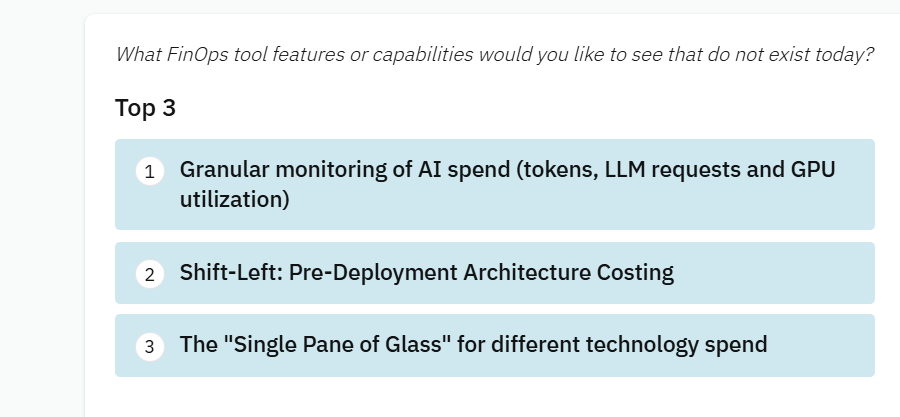
The report shows that expectations from FinOps tooling are evolving alongside practice maturity.
Top requested features include:
- Granular monitoring of AI spend (tokens, LLM requests, GPU utilization)
- Shift‑left capabilities, such as pre‑deployment architecture costing
- A single pane of glass that brings together different technology spend types
Key Finding #9 - The Role of Data Normalisation (FOCUS)
To deliver value across technology domains, one of the biggest enablers has been improvements in how cost and usage data are standardised.
The FinOps Open Cost and Usage Specification (FOCUS) is becoming a foundation for this work. It allows organisations to bring together billing data from multiple sources—cloud, AI services, SaaS platforms, licensing systems, and more—into a consistent format.
Why is that important?
Because when data speaks the same language across all technology domains, teams can:
- Compare performance across tools and services
- Spot trends and anomalies earlier
- Align spend with business outcomes consistently
- Provide leaders with insights that inform strategy
FOCUS is more than a technical specification - it’s becoming the language that lets FinOps teams operate at scale across diverse tech landscapes.
Closing Thoughts: What This Means for Organisations
The State of FinOps 2026 report clearly shows that FinOps is no longer a niche cost management function. It has grown into a strategic capability that helps organisations understand technology investment and derive measurable value from it.
What it tells us is simple but profound:

If you are shaping a FinOps or technology strategy, three practical moves stand out:
- Broaden your scope
Look beyond the public cloud into SaaS, licensing, data center, AI, and eventually labor. Use standards like FOCUS to keep the data manageable. - Secure strong technology leadership backing
Align under CTO/CIO ownership, ensure VP+ sponsorship, and push for a seat at the table where technology choices are made. - Invest in AI on both sides
Build strong governance around AI spend while also adopting AI capabilities that enhance the FinOps practice itself.
As you think about your own organisation’s journey, ask yourself: Are you still thinking about FinOps as cost-cutting or as value creation? Because the best teams in 2026 are already answering that question - and acting on it.