



8
8The cloud has become a game-changer for organizations of all sizes, with its enticing blend of cost savings and data-sharing capabilities. Driven by a compelling range of business advantages, enterprises are undergoing a massive cloud migration movement. As IT leaders manage the migration process, achieving a robust cloud environment is challenging.
Just as corporate governance covers strategy, ethics, and risk management, businesses need a set of rules to manage overall cloud efficiency and costs. That is where cloud governance comes in—and the benefits go well beyond cost control.
Whether it is AWS data governance, Azure governance, or GCP governance, its impact on business efficiency is critically important.
Cloud Governance Benefits at a Glance
| Benefit | Business Outcome | Typical Metric |
| Cuts wasted cloud spend | Right-sizes and reclaims idle/over-provisioned resources | Gartner: cloud cost management and governance can reduce cloud spend by 10–30% |
| Speeds up audits | Automates evidence collection and policy enforcement | 40% faster audit completion with compliance automation and policy-as-code (Gartner, 2025) |
| Cuts compliance violations | Enforces guardrails automatically instead of manual checks | 30% fewer compliance violations with automated governance (Gartner, 2025) |
| Reduces breach risk from shared-responsibility gaps | Clarifies provider vs. customer security duties | Over 80% of cloud breaches trace back to mismanaged shared responsibilities (Gartner, 2024) |
| Strengthens data security | Centralizes access and data controls | 66% of organizations cite improved data security as a top governance benefit |
| Lowers financial/regulatory risk | Reduces exposure to fines and penalties | 39% of organizations report reduced financial risk from governance |
| Improves audit readiness | Standardizes reporting and controls | 25% of organizations report improved auditing processes |
| Improves cost visibility | Centralizes multi-cloud spend monitoring | Gartner: 1 in 4 organizations will be dissatisfied with cloud outcomes by 2028 without strong governance and cost visibility |
| Enables smoother expansion | Standardized policies simplify entry into new markets | 14% of organizations say governance enables smoother geographic expansion |
| Raises overall FinOps/governance maturity | Centralizes ownership via CCOEs and FinOps teams | 71% of organizations now run a Cloud Center of Excellence; 63% have established FinOps teams (Flexera, 2026) |
What is Cloud Governance?
Cloud policy and cloud governance are rules and commitments that state the intent and approach for cloud-related activities to streamline processes.
According to the FinOps Foundation, a "Cloud Policy is a clear statement of intent, describing the execution of specific cloud-related activities in accordance with a standard model designed to deliver some improvement of business value." Likewise, the FinOps Foundation states, "Cloud Governance is a set of processes, tooling, or other guardrail solutions that aims to control the activity as described by the Cloud Policy to promote the desired behavior and outcomes."
FinOps Foundation states that Cloud Governance executes the Policy by the following three methods:
- Guidelines – that set out best practices for policy implementation and how it can be achieved. These are advisory, rather than mandatory.
- Guardrails – formal processes and structures that define mandatory pathways for policy-compliant action, possibly with consequences for non-compliance.
- Automation – processes that automate policy implementation and which therefore control how compliant actions are carried out.
Cloud governance helps maximize ROI by aligning cloud activities and supporting the consistent adoption of Cloud FinOps best practices. Together, cloud policy and governance help to organize and guide Cloud FinOps Activity.
10 Benefits of Cloud Governance
1. Cuts wasted cloud spend
Governance frameworks bring right-sizing, scheduling, and reclamation policies into the cloud environment, rather than leaving cost control to individual teams. Gartner estimates that structured cloud cost management and governance can reduce overall cloud spend by 10–30%. That upside is significant given that Flexera's 2026 State of the Cloud Report found wasted cloud spend climbed to 29% — the first increase in five years, driven largely by AI workload sprawl.
2. Speeds up compliance audits
Manually gathering evidence for every audit is slow and error-prone. Organizations that pair compliance automation with policy-as-code inside their cloud stack complete audits roughly 40% faster than those relying on manual processes, according to a 2025 Gartner report.
3. Reduces compliance violations
That same automation-first approach doesn't just speed audits — it prevents problems before they happen. The same Gartner research found organizations using policy-as-code see about 30% fewer compliance violations than teams managing compliance manually.
4. Closes shared-responsibility security gaps
Cloud security is a shared responsibility between provider and customer, and confusion about where that line sits is a leading cause of breaches. Gartner reports that over 80% of cloud breaches stem from mismanaged shared-responsibility boundaries—a gap that clear governance policies are designed to close.
5. Strengthens data security
Governance frameworks that classify and control data access pay off directly: 66% of organizations cite improved data security as the most cited benefit of a formal governance framework.
6. Lowers financial and regulatory risk
Beyond security, governance reduces exposure to fines and penalties tied to non-compliance. 39% of organizations point to reduced financial risk as a direct benefit of their governance framework.
7. Improves auditing processes
Standardized controls and reporting structures make ongoing audits easier to run, not just faster to complete. A quarter of organizations (25%) specifically credit governance with improving their auditing processes.
8. Improves cost and resource visibility
Without governance, multi-cloud visibility fragments across teams and providers. Gartner predicts that by 2028, one in four organizations will be dissatisfied with their cloud outcomes — often due to weak governance and poor cost visibility — underscoring how central visibility is to governance value.
9. Enables smoother geographic expansion
Standardized data and compliance policies make it easier to extend cloud operations into new regions and regulatory environments. 14% of organizations report that governance directly enables smoother geographic business expansion.
10. Raises overall cloud and FinOps maturity
Centralized ownership is now the norm among mature cloud organizations. Flexera's 2026 State of the Cloud Report found 71% of organizations now operate a Cloud Center of Excellence (CCOE) and 63% have established dedicated FinOps teams — both signs that centralized governance has become essential to managing growing multi-cloud and AI-driven complexity.
Importance of Cloud Governance
Shifting from traditional data center practices to embracing the Cloud FinOps culture, characterized by specific attitudes and behaviors focused on extracting business value from cloud technology, poses a significant challenge. Policy and cloud governance help establish and sustain a Cloud FinOps culture.
A cloud governance framework is a structured, comprehensive set of policies, procedures, and controls that regulate how users work in cloud environments to ensure consistent performance of cloud services and systems within an organization. It is crafted to ensure system integration, data security, and efficient cloud deployment to meet business goals. Implementing and monitoring a cloud governance framework helps businesses improve oversight and control over cloud operations such as data management, data security, risk management, legal procedures, and cloud cost management.
- Cloud governance has a few more advantages as follows:
- Reduces time and effort spent on manual tasks.
- Optimizes cloud resource management.
- Minimizes security risks.
- Improves visibility and business continuity.
- Regulates and monitors data access.
During the early stage of cloud adoption, Cloud Governance plays a crucial role in implementing FinOps personas across the organization. According to the FinOps Walk maturity model, organizations are classified into three categories, namely Crawl, Walk, and Run.
Source: https://www.finops.org/framework/capabilities/policy-governance/
Challenges faced in implementing effective cloud governance
Developing and implementing Cloud Governance in an organization involves several challenges that need to be addressed.
- Cloud adoption: Transitioning from a traditional data center to cloud infrastructure involves several challenges, such as skill gaps, a lack of metrics to measure performance and risk, and credential and access management. Understanding the migration process from on-premises data centers and avoiding cloud cost pitfalls is therefore a crucial step.
- Integration with the existing IT infrastructure: Many organizations have existing IT infrastructure. To implement effective cloud governance, you need a thorough understanding of the existing system, data flows, and dependencies.
- Balancing between security and compliance with innovation: Promoting innovation and agility without compromising on security and compliance is a challenge that cannot be overlooked. Cloud security challenges like data breaches and system vulnerabilities require careful planning and designing of policies and controls. A strong cloud governance strategy helps keep the organization's cloud environments safe from adversaries.
Key components of a robust cloud governance strategy
The following are the key components of the cloud governance strategy:
- Data Management: Data classification according to risk, business value, and compliance requirements provides clear guidance for managing the entire data lifecycle.
- Operations Management: A well-defined cloud governance strategy helps in cloud cost monitoring and performance to detect unusual deployments of cloud resources. It also covers how cloud resources deliver services.
- Financial Management: Cloud governance strategies establish the guidelines and policies to optimize cloud usage and avoid cost overruns. By following an organizational cloud governance framework, financial management becomes easier.
- Infrastructure and Configurations Management: By adopting a robust cloud governance strategy, organizations can manage configurations more easily, control storage, and manage dynamic cloud infrastructure.
- Security and Compliance Management: The cloud has made information access and sharing easy. A key pillar of cloud governance is managing security policies to prevent data breaches. Organizations can ensure compliance and security in cloud governance by implementing appropriate protocols. A governance framework must include proper authentication policies to protect information confidentiality, integrity, and availability.
- Performance Management: Regularly monitor performance metrics to ensure efficient cloud infrastructure usage and cloud service delivery.
Best practices for effectively managing multiple cloud service providers
Multiple cloud service providers offer benefits when managed with cloud FinOps best practices.
The 5 FACES of Good Cloud Policy & Governance:
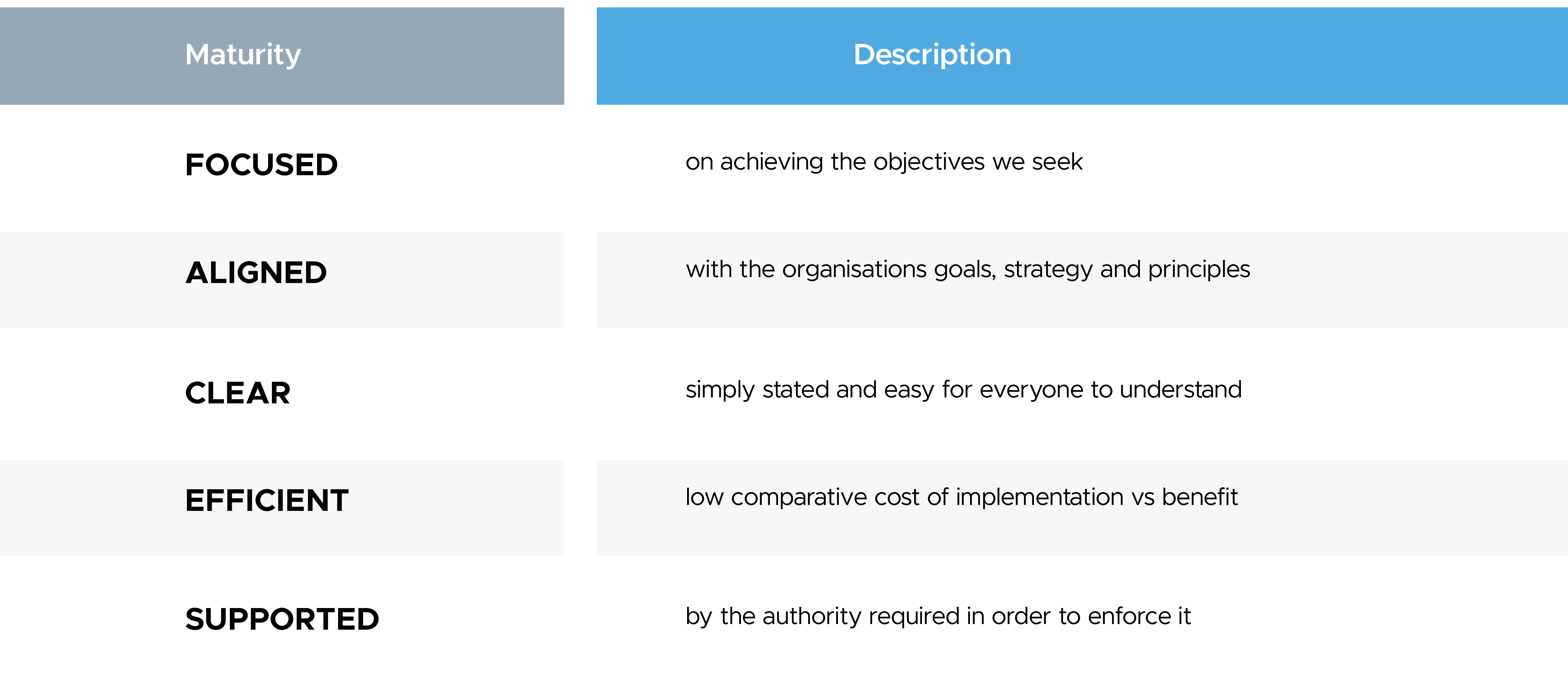
Source: https://www.finops.org/framework/capabilities/policy-governance/
Multiple cloud service providers can be managed by adopting the following approach:
- Well-defined objectives and strategies.
- Choosing the right cloud service providers.
- Adopting cloud governance in the organization.
- Cloud cost monitoring.
CloudKeeper is a leading cloud cost optimization solution that ensures cloud governance and provides full Cloud FinOps capabilities to help the organization improve efficiency. CloudKeeper streamlines and operationalizes cloud configuration and management across multiple platforms and services, with an expert-designed cloud governance framework.
CloudKeeper delivers instant and guaranteed cloud cost savings, in-depth cost analytics, and expert-backed optimization guidance.
Want to learn more? Speak to an expert today!