


DevOps Engineer
Kanishka specializes in Google Cloud Platform (GCP) and architecting automation solutions that simplify, scale, and secure cloud workloads.


Find your cloud savings in under 5 minutes

Get a $100 reward on signup


Managing Committed Use Discounts (CUDs) at scale has traditionally been a challenge for FinOps practitioners and cloud operations teams. While Google Cloud Billing Exports provide detailed visibility into cloud usage, costs, and applied credits, they do not offer a centralized view of the commitments themselves.
To bridge this gap, Google Cloud recently introduced CUD Metadata Export (Preview), which exports commitment subscription information into BigQuery through the cud_subscriptions_export table.
This export provides a daily snapshot of purchased commitments, enabling organizations to answer critical questions such as:
One of the most important concepts to understand is that CUD Metadata Export is not a billing export.
Many users initially expect the table to provide information such as:
However, the export serves a different purpose.Think of it as a commitment inventory system rather than a cost reporting dataset.
If the standard Billing Export answers: "What did I spend?"
Then the CUD Metadata Export answers: "What commitments have I purchased?"
This distinction is essential when designing FinOps reporting and commitment management dashboards.
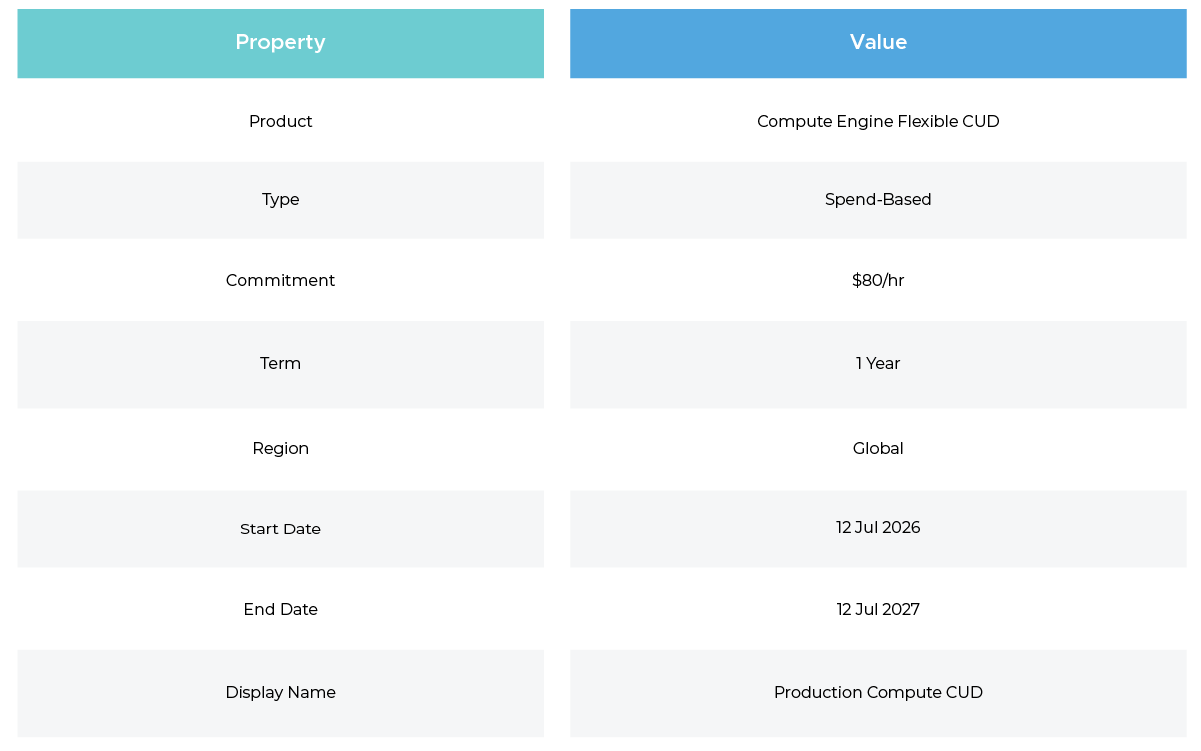
To better understand the exported fields, consider the following example commitment that will be referenced throughout this article.
 Understanding the Exported Fields
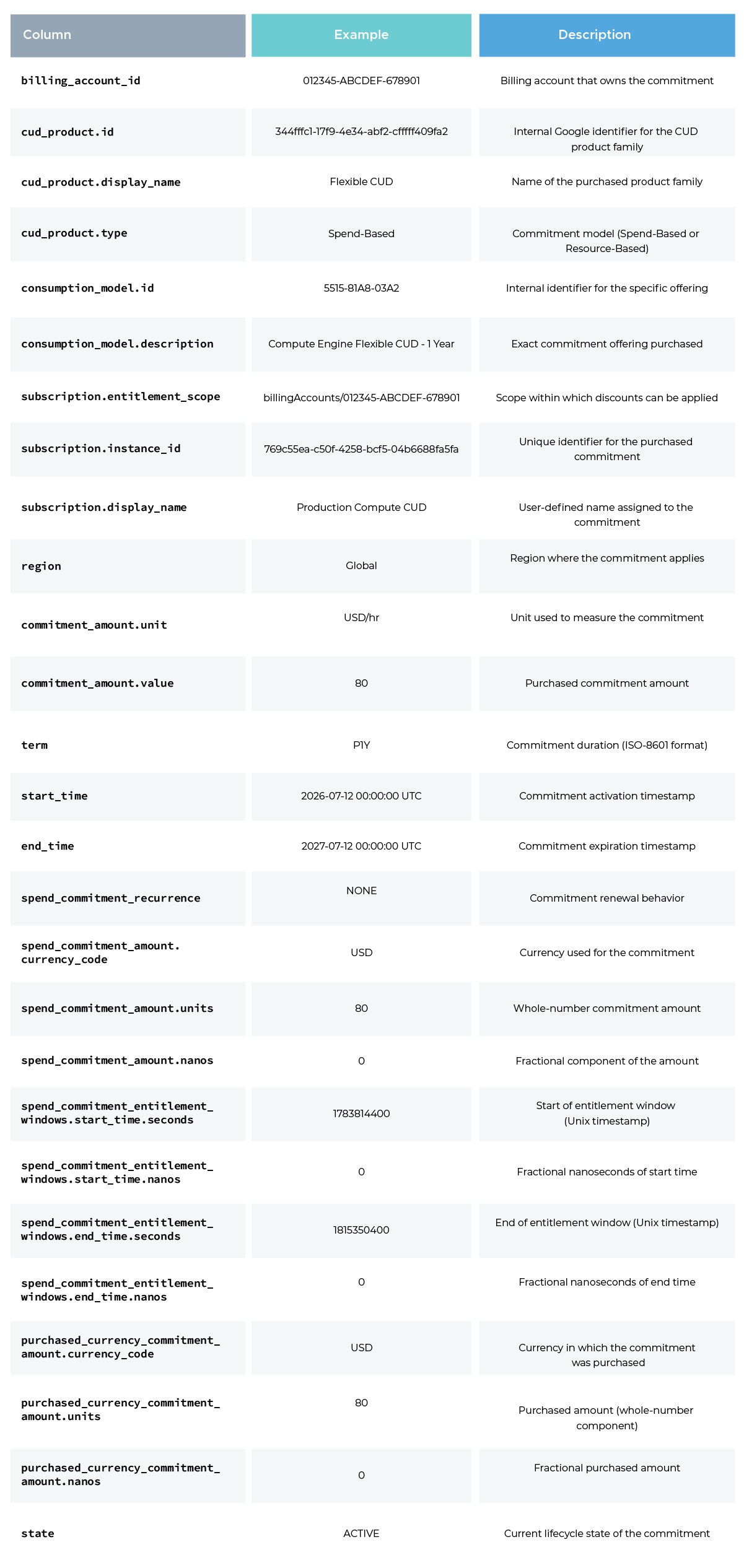
The following table explains the most important fields available within the cud_subscriptions_export table.
 Understanding the Three Most Commonly Confused Fields
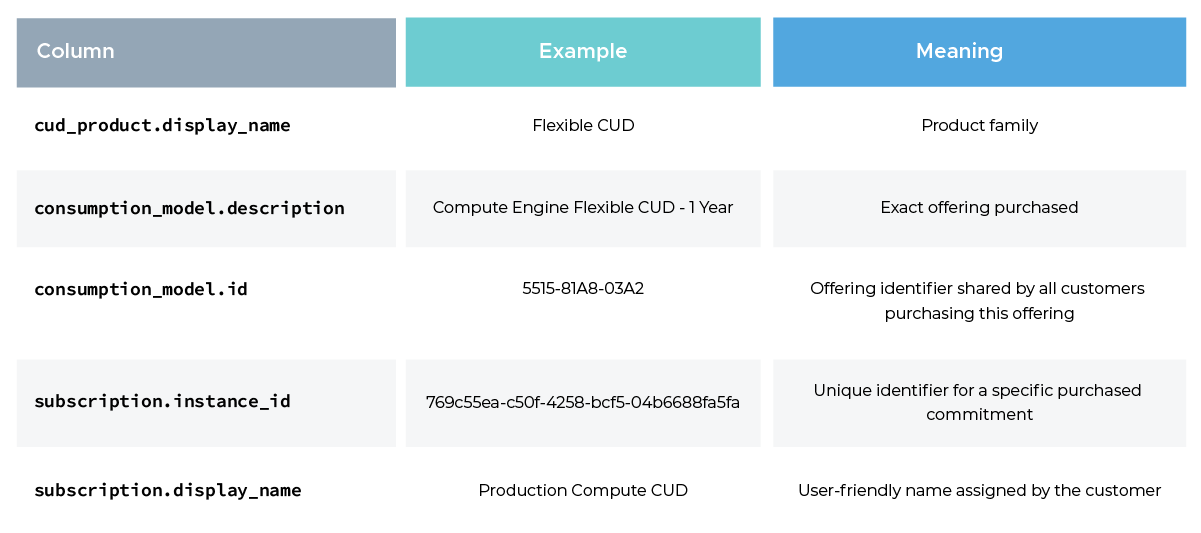
A frequent source of confusion is the distinction between the product family, offering, and subscription identifiers.
Assume that 100 different customers purchase the same offering:
Compute Engine Flexible CUD – 1 Year
The fields below represent different levels of information.
 Hierarchy Overview
 Understanding this hierarchy makes it significantly easier to build inventory reports and commitment management dashboards.
Using our example commitment of $80/hr, the exported fields can be interpreted as follows:
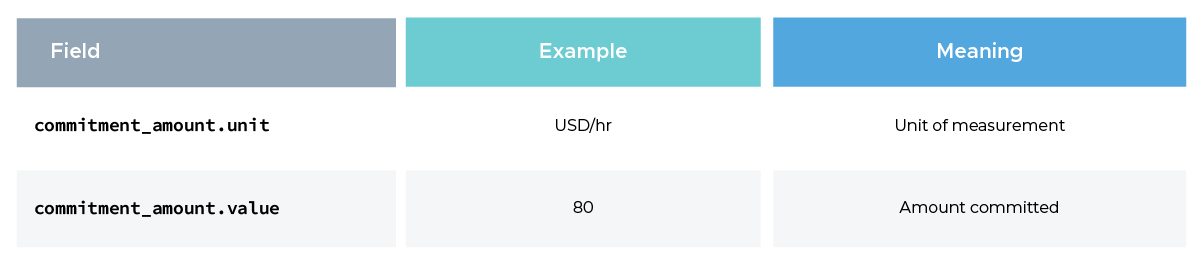 Combined, these fields indicate that the customer has committed to spend:
80 USD/hr
This represents the hourly commitment purchased through the CUD agreement.
While reviewing the schema of the cud_subscriptions_export table, several fields were observed that are currently not fully documented in the official Google Cloud documentation.
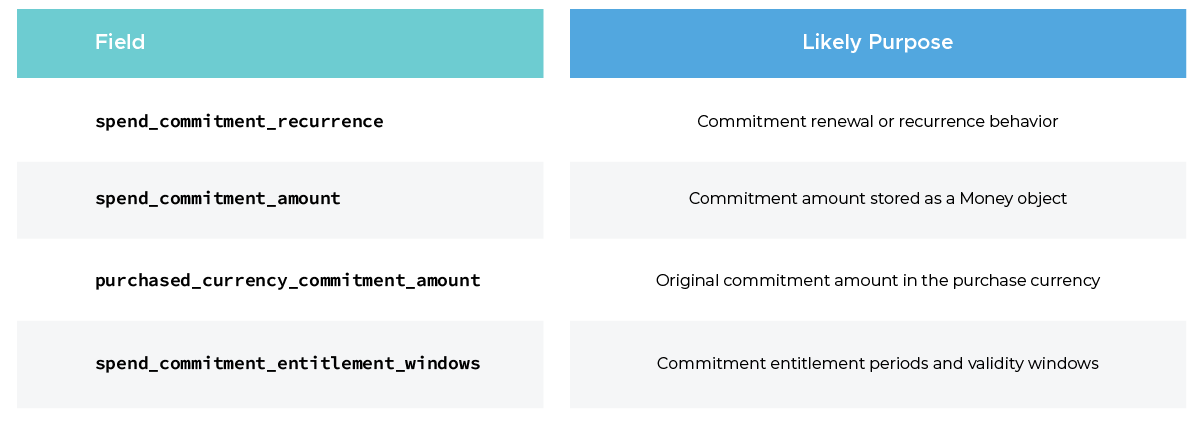 These fields may become increasingly important as Google expands the functionality of the export in future releases.
While analyzing the cud_subscriptions_export table in BigQuery, several additional fields were identified that are not currently documented in the official Google Cloud CUD Metadata Export documentation.These include:
Because the feature is currently in Preview, the schema and semantics of these fields may change before General Availability (GA). Organizations should therefore treat these fields as informational and validate their behavior before incorporating them into production reporting or automation workflows.
The CUD Metadata Export fills a long-standing visibility gap in Google Cloud commitment management by providing a centralized inventory of purchased commitments. While it does not replace Billing Export data for cost or utilization analysis, it provides essential metadata needed to track commitment ownership, coverage, lifecycle status, and expiration dates.
For FinOps teams, this export serves as the foundational dataset for building commitment inventory dashboards, renewal tracking processes, governance controls, and proactive capacity planning workflows.

99% of companies saved up to 15% monthly with this plan & achieved peak performance.